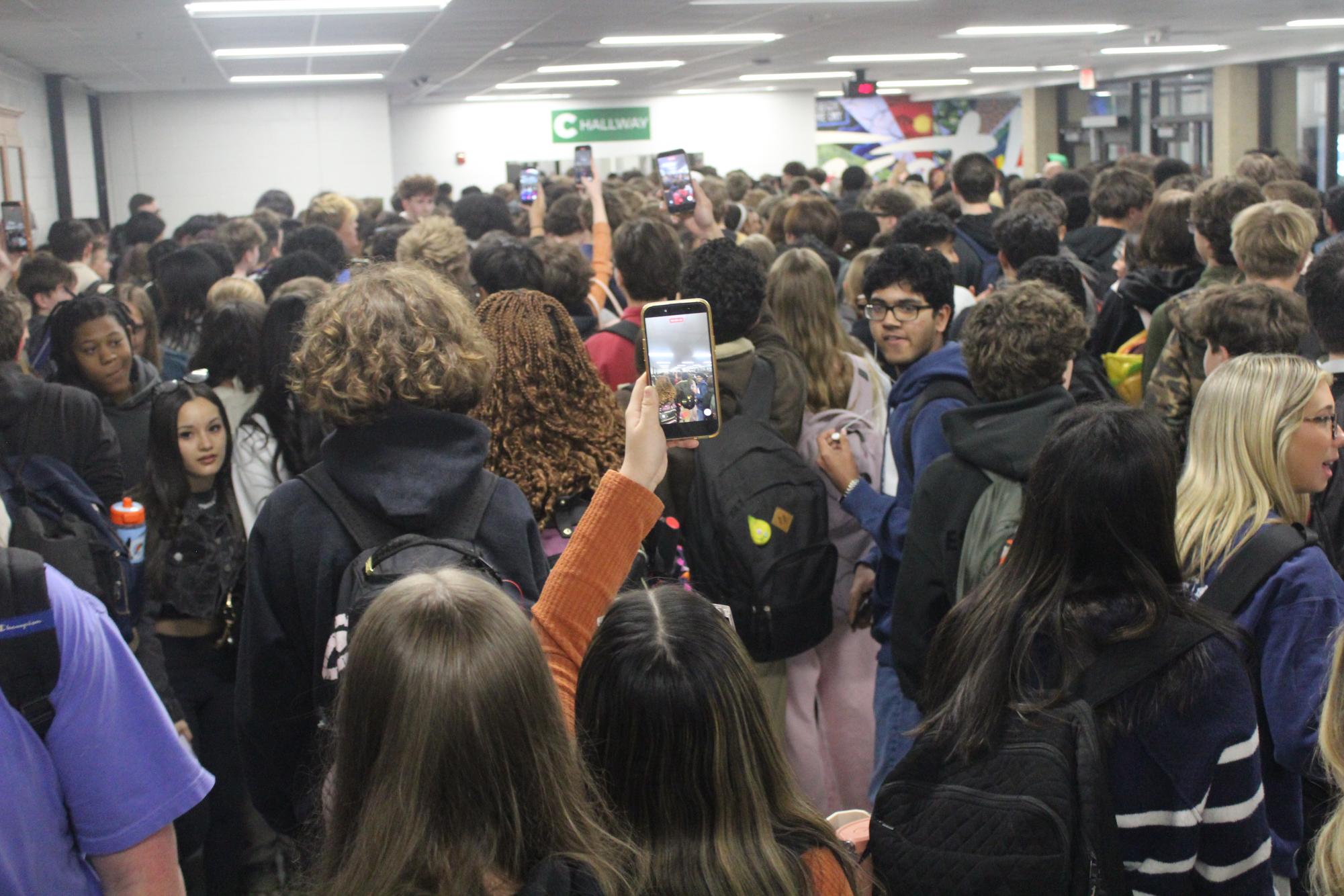


During the week of Jan. 26, a small group of students at McIntosh planned an in-school walkout to join the #ICEout movement spreading throughout high schools and colleges across the United States. This small group consisted of multiple seniors, but was led predominantly by senior Oliver Furlong. More than 200 students joined the “McIntosh Against ICE” GroupMe to receive updates about the walkout, which they set for that Friday, Jan. 30. They discussed sign ideas and the path that they wanted to walk, along with rules and regulations for the walkout.
“It was not easy work getting about 250 people together in less than two days. I knew that there were a lot of students who felt very strongly about the topic, and it was a topic you should feel strongly about. I mean, there are neighbors, friends and our fellow Americans who are either getting deported or killed in the street for exercising their rights,” Furlong said.
Schools across Georgia walked out in response to the Trump administration’s increase of Immigration and Customs Enforcement (ICE) activity in Minneapolis, Minnesota. Renee Good, 37, was shot and killed in her car by an ICE agent on Jan. 7, and on Jan. 24, 37-year-old Alex Pretti was shot and killed by ICE agents.
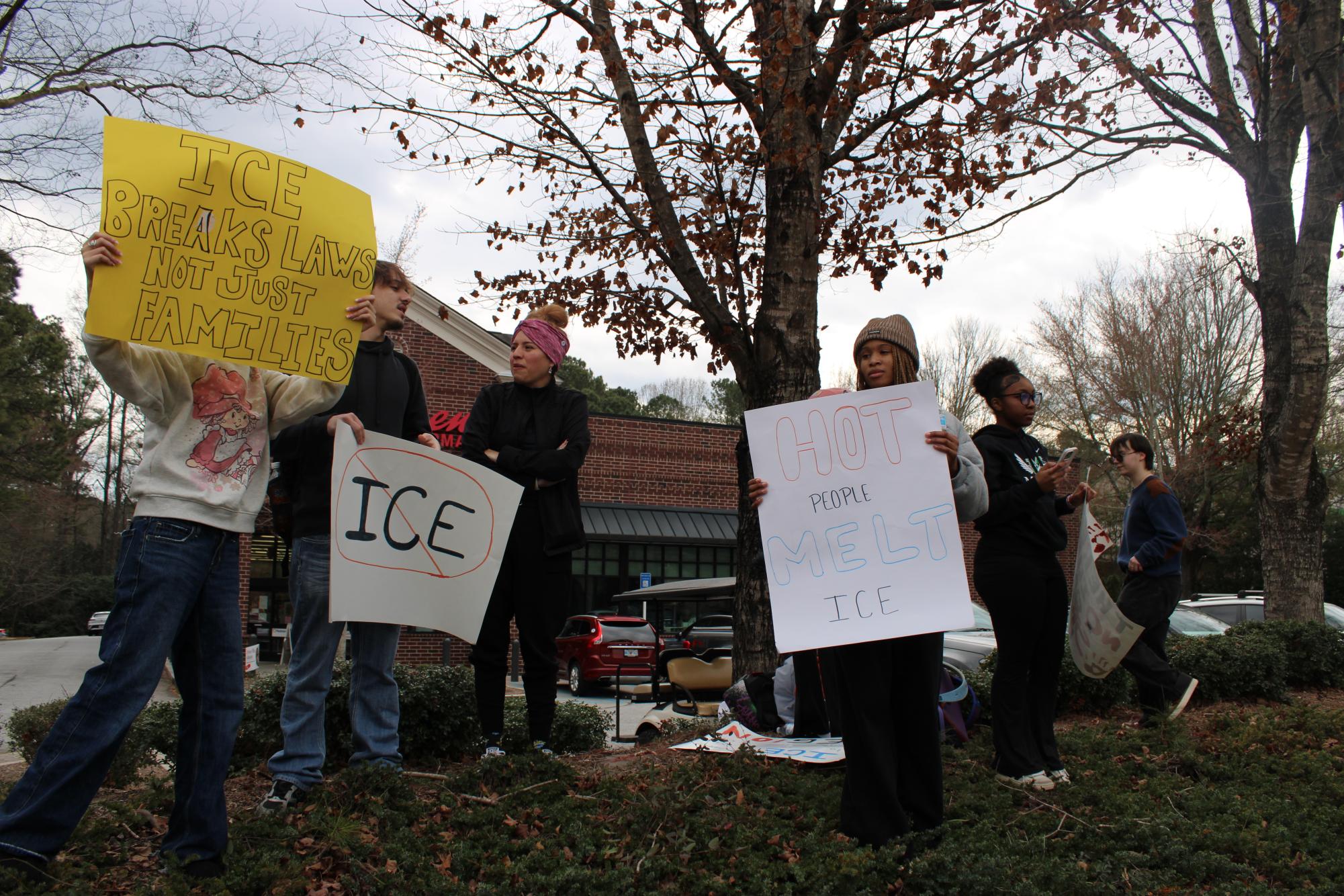
“Around 30 to 50 students [walked out]. We started at 1:03, in front of the school and then we started walking. We took the golf cart paths to Walgreens. The walkout ended around five. We had signs like ‘ICE out,’ ‘Immigrants built America,’ ‘ICE always melts’ and Mexican flags. We got a lot of honks and thumbs ups but we also got people pointing middle fingers at us,” junior Pearl Landeros said.
Despite mixed reactions from the community, students like Fabrisio Ortez, felt personally motivated to speak out against the recent ICE raids.
“Since my family is from an immigrant background it took them a lot of time to get their citizenship. And even now, citizens of the United States, are also being affected by what’s going on,” junior Fabrisio Ortez said.
Sophomore Zakiya Webb also participated in the walkout because it excited her to see people take action and potentially inspire others to do the same.
“When I first heard about [the walkout], I was excited because it really meant a lot that people in our school actually cared enough about the situation and wanted to fight. And when I heard more people were doing it, it definitely made me more excited to join,” Webb said.
Webb hopes that the walkout inspires others to take action in the future, and make America better.
“I was really hoping that if [onlookers] saw people from a high school protesting, that they would be like, ‘Wow the kids are actually involved in politics,'” Webb said. “I really hope to just see people want to accept change, because I see that America is always like ‘we want change,’ and ‘we want this,’ but when it actually comes down to it, they don’t take action.”
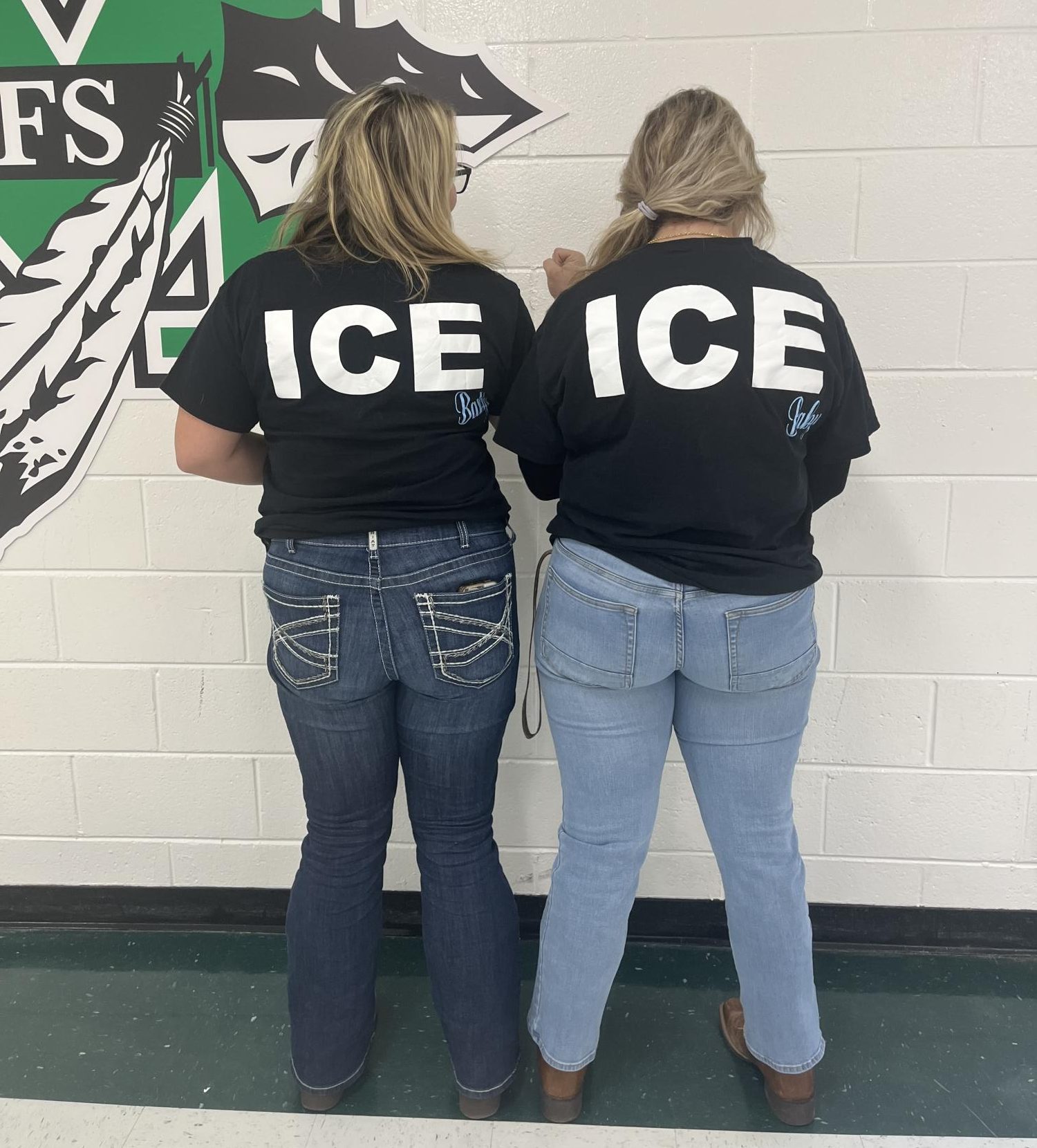
Other students, such as senior Madison and sophomore Mackenzie Flett, did not support the walkout and believed it would pose a threat to the protesters’ safety. On the day of the walkout, they both wore shirts with the word “ICE” on them to show their opposing viewpoint.
“Yes, [our shirts are in support of ICE.] I think that [the walkout] shouldn’t be allowed in school, and I think administration should have done more to stop it, only for safety concerns. I agree with everybody sharing their opinion, because not everybody shares the same opinion, but I don’t think it should be allowed on school campus,” Madison Flett said.
Her sister, Mackenzie Flett, believes that efforts to protest such as the walkout would cause an interruption to the school day.
“It’s just a disruption to the learning environment. Besides that, I mean, do what you want in your free time, but just leave [it for] out of school hours,” Mackenzie Flett said.
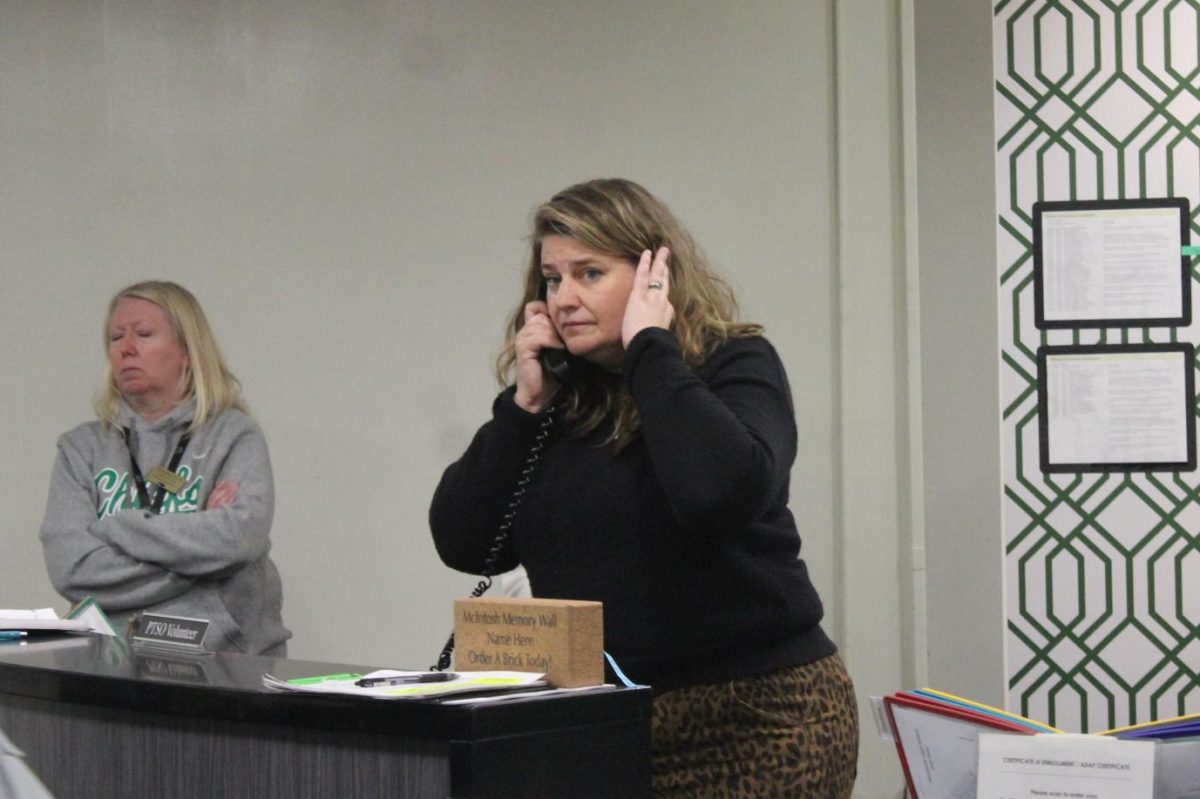
Prior to the walkout, Principal Amy Hammock met with walkout organizers to discuss what students participating could do, and what the consequences would be for walking out without following school rules.
“Those [rules] are all in the Code of Conduct, so disturbing the school and creating a substantial disruption to what we’re here to do everyday, which is teaching [and] learning, I can’t approve of,” Hammock said.
Students who did not check out received consequences as the Code of Conduct states that the consequences for participating in a disruption to the school day, like a walkout, “may range from short-term suspension to a disciplinary tribunal hearing that may result in long-term suspension or expulsion,” according to section 29 of Offenses and Consequences.
“The consequences for me were Saturday school for three hours. I haven’t had any issues with [misconduct,] so I think it’s light for what I did because I skipped school. I just walked out the front door. They had janitors trying to block it, but if you just walked out, they let you out,” Ortez said.
Some students checked out to avoid consequences.
“I did check out because they told us that it is against the [school] law to disrupt class, so I just checked out to make it easier even though it was supposed to be a walkout,” Landeros said.
Furlong said that he was proud to see students advocate against increased ICE activity.
“I was really proud to see everyone who was ready to participate and speak out for what they believe in,” Furlong said.