
Classic literature’s relevance debated in modern high schools
Rebecca Hamilton
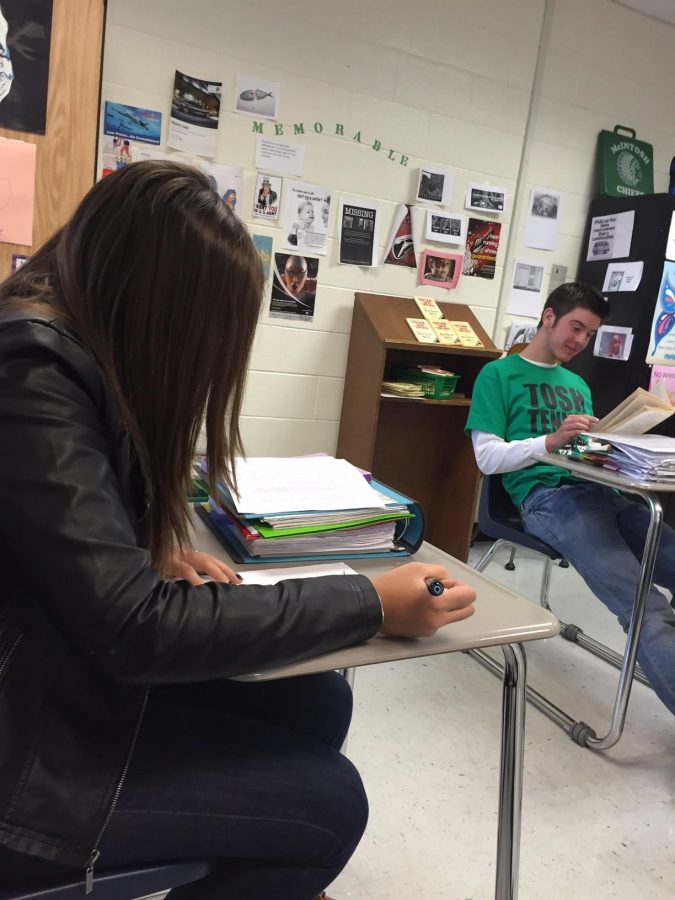
Students prepare for tests over assigned reading.
Mar 2, 2015
It’s a right of passage in American public schools for students to read and analyze the classical literature assigned to them by their teachers. Some students enjoy the books while others find them tedious and uninteresting. However, most students enjoy some books while disliking others. It’s a toss of the dice.
Columnist John Karzemsky said, “I can’t say how common this is, but is there a possibility that kids who are forced to read books they find dull, monotonous, and irrelevant are turning into adults that associate reading at large with those feelings?”
Karzemsky’s concern is not unfounded. Something that he does not address, however, is that students give up personal reading because of the heavy levels of school-assigned reading. Then, students get into the habit of not reading for personal pleasure and carry that habit into adulthood.
My favorite assigned books at McIntosh are Fahrenheit 451 and Sophie’s World, but many of my friends didn’t like those books as much as I did. On the other hand, a favorite among my peers is the Scarlet Letter, and while I didn’t dislike the book, it was definitely not my favorite.
Reading is an incredibly rewarding experience, but it’s also an incredibly personal one. What one person hails the greatest book on earth might be be mere drivel to another.