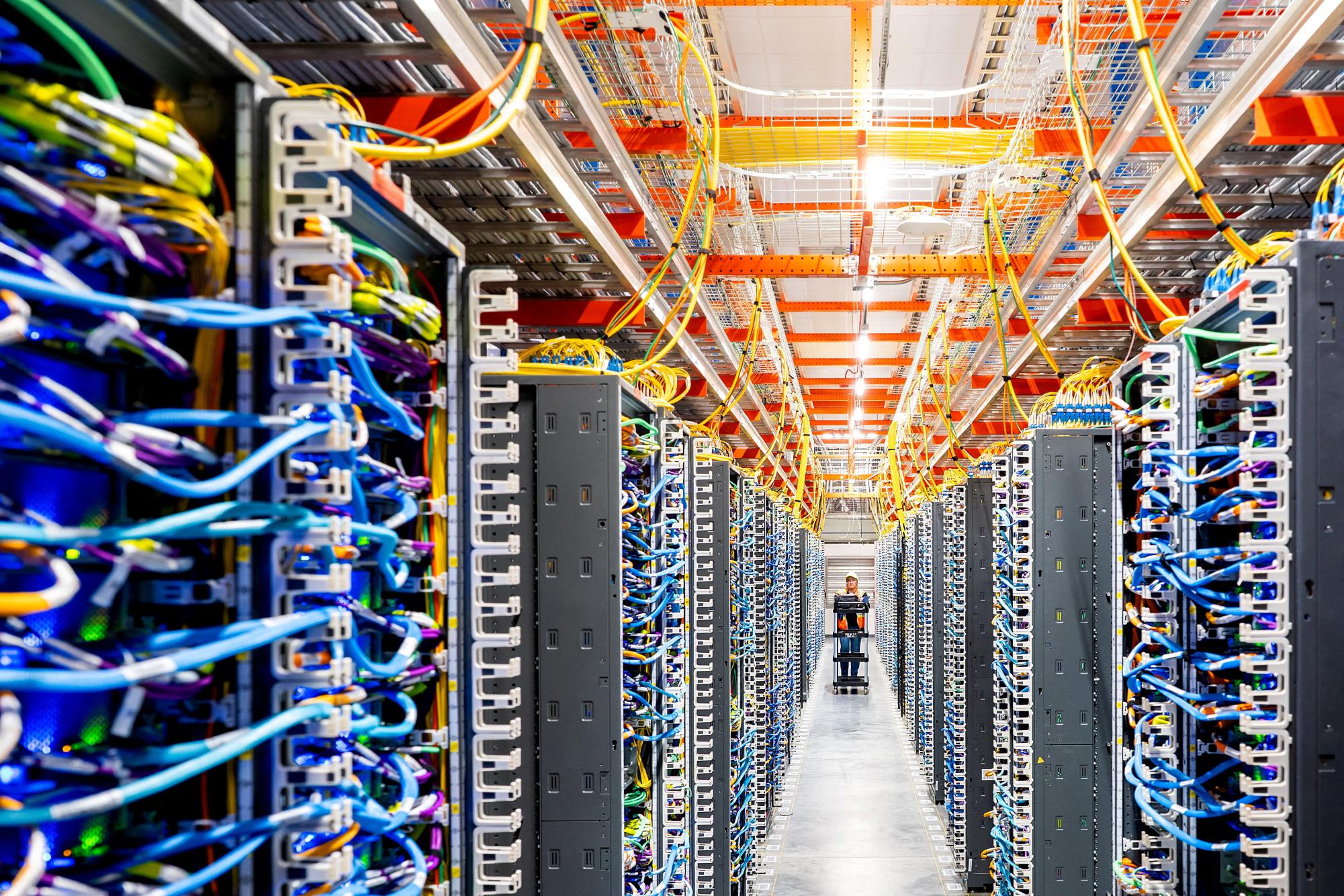
Hundreds of data centers have popped up throughout the state, including Fayette County. They’ve been at the center of numerous problems. Including RAM (Random-access memory, a key component in computers) shortages, climate problems and water pollution. Yet despite these issues, they’ve been expanding across the nation.
“It’s a race to the bottom,” said Alex Maslowski, a nuclear engineer who has experience with data centers in Georgia. “Every county in the United States wants to get a data center in their county, and so they reduce the taxes on it, they give them subsidized electricity to pay for infrastructure, [i]t’s not a fair deal.”
One particular data center, one operated by QTS, which is a large provider of data centers, in Fayetteville, has gotten the attention of many residents. Recently, Fayetteville residents in Annelise Park noticed their water pressure was unusually low. That ended up being because of a staggering 30,000,000 gallons of water being drained towards that center over nine to fifteen months without paying.
“What happened to that water, though? Is the water just for cooling? Then you get cold water in, warm water out, not a big deal.” said Maslowski. “Is the water for cleaning that needs to be processed? Okay, but we still know how to process it. Is the water having an impact on the community because it wasn’t planned? [I]t’s not an environmental issue, it’s a production issue.”
Data centers are not completely lacking in benefits, though. Quite the opposite, in fact. More than $10.4 billion in economic benefits have been generated for the state of Georgia since 2018, and these centers have made services like Claude and ChatGPT able to exist and deal with the high amount of demand from users. They also provide jobs to the areas around it, hence why there have been so many counties looking for them to be built.
“The factory side, where we use it to generate data, is super useful and super important. It’s going to increase productivity of workers in the US significantly at all levels, and that means that everybody’s going to make a lot more money one day to take home,” said Maslowski. “Professionally, I have seen an incredible increase in the productivity of my engineering, because of the machine learning that these data centers have provided.”
Despite their benefits, there has still been public outcry against them being built. Since March 5, 2026, data centers (with the exception of the one being built) have been banned from being built in Fayetteville, after citizens raised their concerns in the town hall.
“In the long term, it does bring jumps into the community, but we can’t just be a race to the bottom, and I think that’s the part most people are not happy [about],” said Maslowski.