

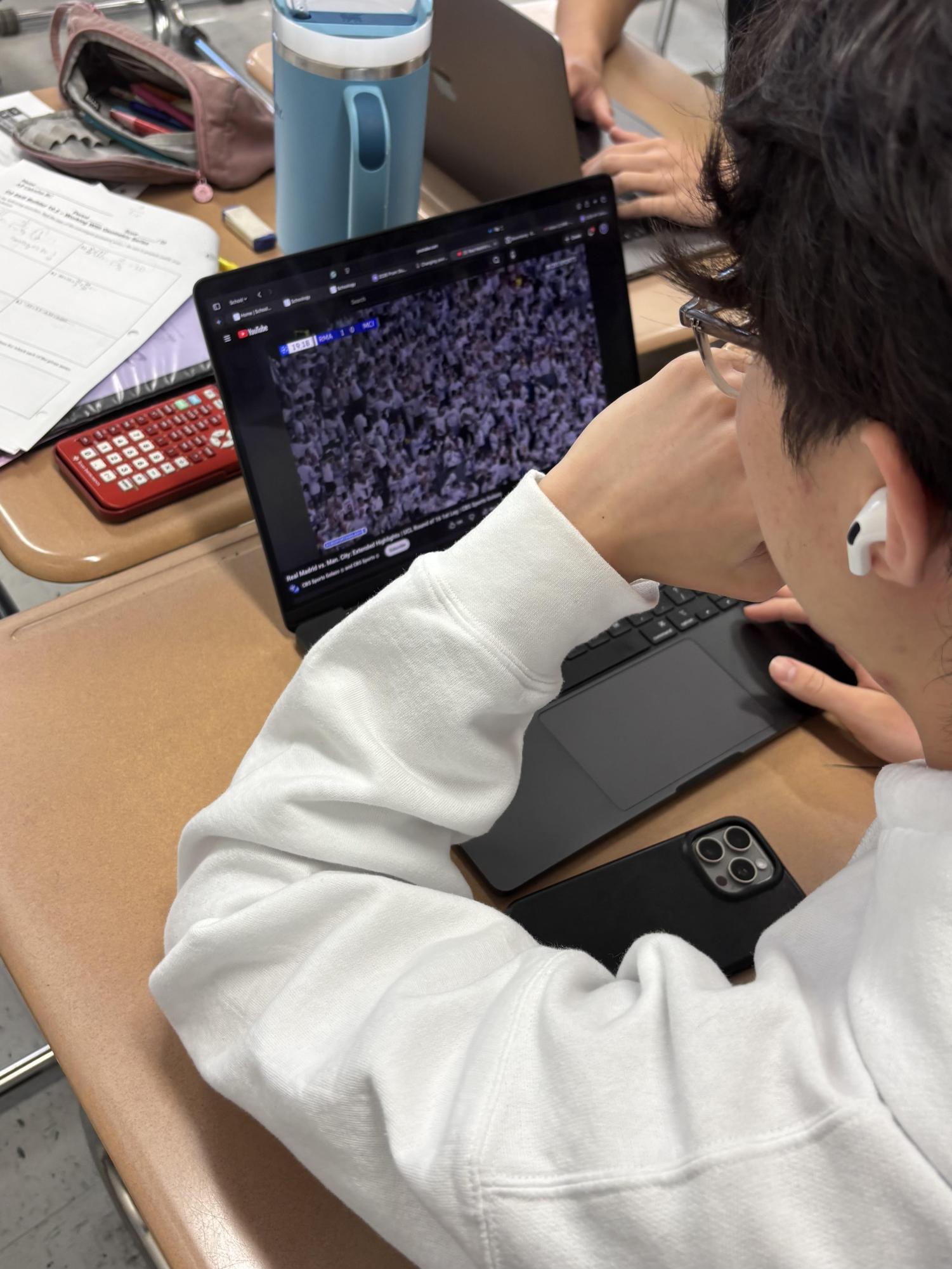
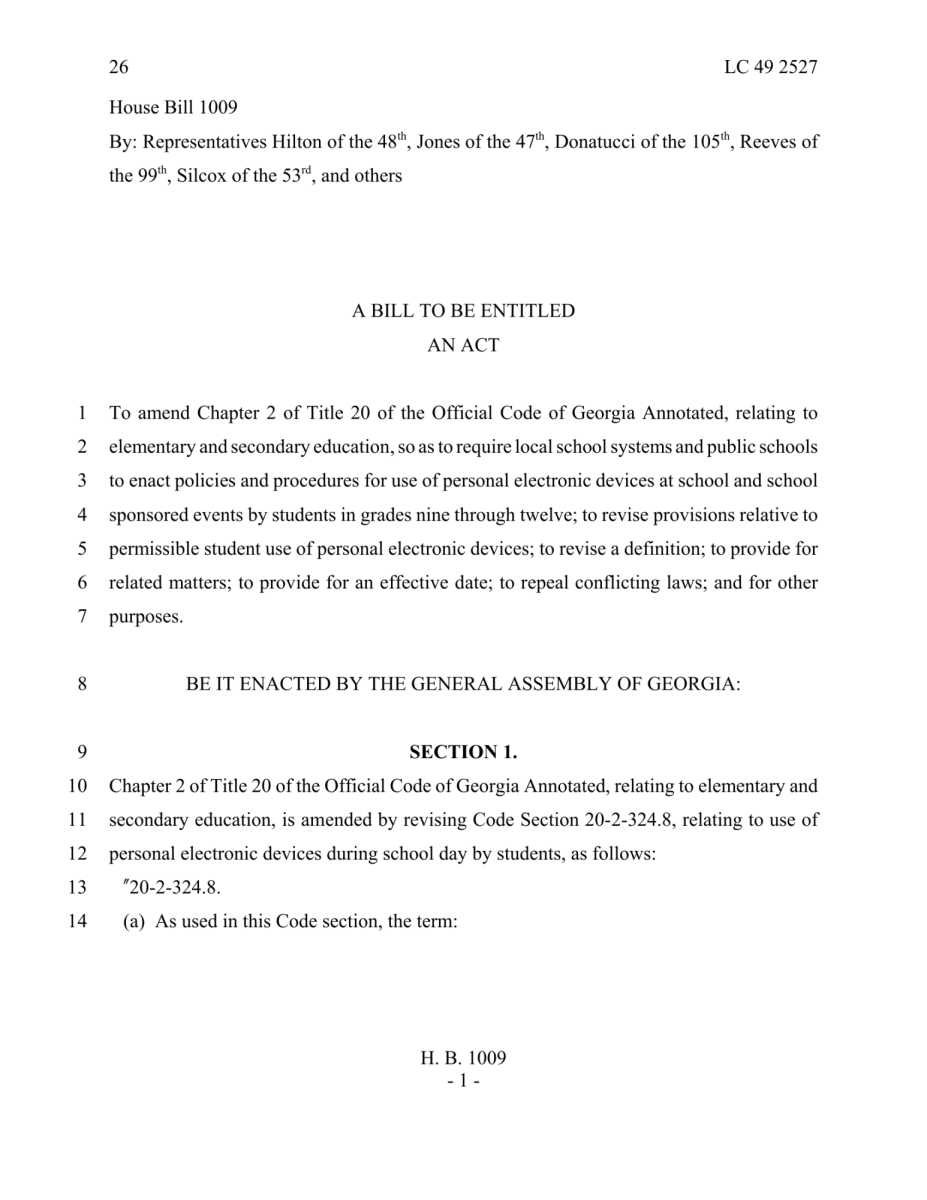
House Bill 1009 has passed in Georgia where K-12 grade public school students will be prohibited to use cell phones throughout the school day. It has been passed by the Senate unanimously and is on the way to the governor. Once this bill is signed by Georgia’s governor, it will be implemented in public schools starting in the 27-28 school year. Last year House Bill 340 was signed into an act where these same rules stand for K-8, so high school students are not surprised by this extension.
By the start of the 2027 school year, phones will not be accessible during the school day. This includes passing periods, study hall and lunch. Phones could be stored in lockers, phone holders in the classroom, or locked pouches, like a Yondr pouch. McIntosh sophomore Leonardo Tepasse-Anderson is a programmer who makes his own websites, who knows how schools prevent use of non-school-owned devices.
“[Yondr pouches] are a networking thing. So they’re basically blocking the waves from coming in contact with your phone at all. So you can’t really get past that, because it’s a physical boundary, not a software boundary,” Tepasse-Anderson said.
These students have grown up with tablets in their laps so they are likely to be a few steps ahead. For years students have found ways around rules at school. Passing notes, morse code tapping, writing answers on their arms. Students are taught to be innovative and with this creativity they sneak around. McIntosh junior Mikaylah Harrison is in her third year of software development and understands how others might get around these new rules.
“People are just going to buy a second phone. They’re not expensive to get at all. They could also just bring another [not school-owned] computer,” Harrison said.
Other ways that students may replace their phones will be through the use of their Chromebook. Game sites are made where students play without the need of their personal device to entertain themselves. IT departments are quick to patch a method but students are quicker to overcome those patches.
“[The IT department] can go into the extension, or whatever dashboard they use, and put the URL [of the gaming website]. It’ll block it for all the students. It just depends on how fast they catch on,” Tepasse-Anderson said.
Even now, students meet each blockage with the introduction of another gaming website. With the intention of a “distraction-free education” for students, this bill may not change much.
“As of right now, teachers can keep an eye on it. It’s in the front of the classroom. You take it when you leave, then go relieve your stress after you’re done with a class. What they have right now is the best thing,” Tepasse-Anderson said.

Christopher D • Mar 17, 2026 at 5:03 pm
Amazing article,
Students’ resourcefulness is exactly the kind of adaptable talent we need in the modern workforce. While a distraction-free environment is the goal, it’s becoming nearly impossible to enforce given the rise of Meta glasses, smartwatches, and even advanced calculators. When it comes to tech, students always seem to stay one step ahead and find workarounds!