


One of the biggest concerns that students have when applying for college surrounds their list of extracurriculars. On Common App, students get to write down a maximum of ten extracurriculars, but which activity is most important when it comes to college applications? How do students know what activity to prioritize?
Lisa Love, McIntosh’s counselor with 27 years of experience in her field, has a method for students filling out their Common App application who participate in over ten extracurriculars.
“Write all the things down that you do and then rank them as the things that you’re the most involved in and that you care about. Then write them down that way, because sometimes you can’t list them all,” Love said.
For students at McIntosh, their top ten extracurriculars vary between sports, clubs, jobs and other after school activities. Even so, there is a general agreement that certain types of extracurriculars are needed to make a strong application. 50 students in McIntosh took a survey asking: ‘Which extracurricular do you think would be most important to a college admission officer?’
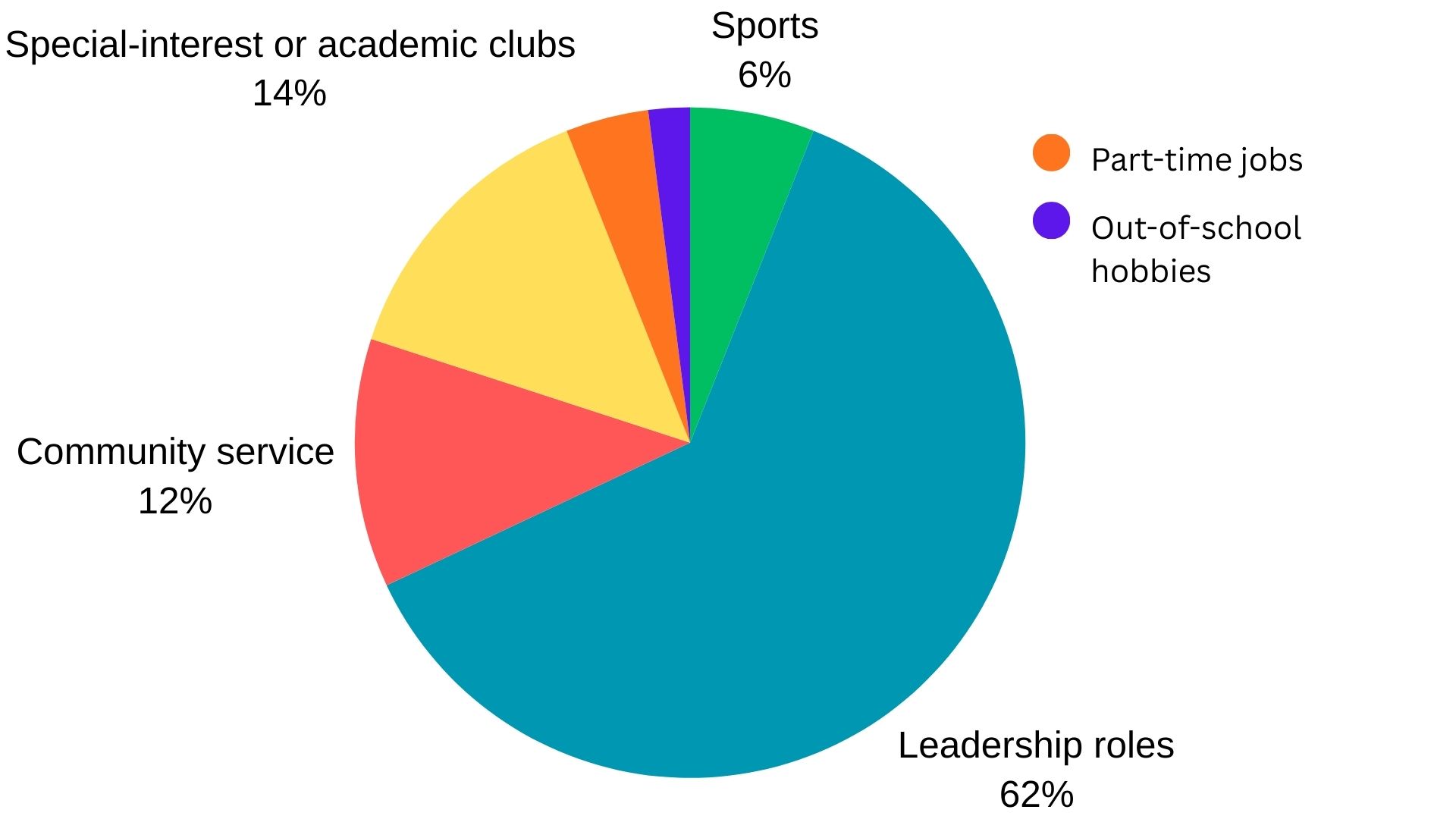
The extracurricular students think college admissions would be MOST impressed by: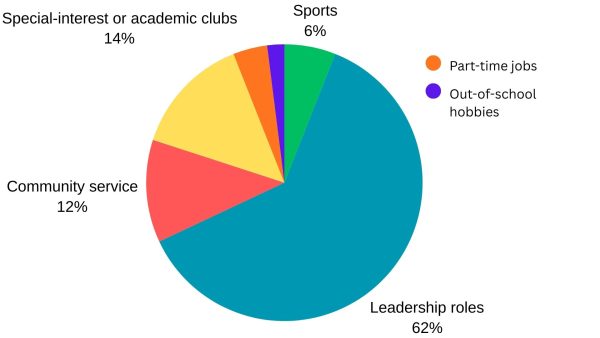
50 McIntosh students surveyed via Google Forms
“Being a part of McIntosh Tennis [is my most valuable extracurricular] because I’ve been devoted to it since freshman year. I’ve been part of the varsity team and last year really paid off with all our dedication by winning the state championship. It’s really important because it’s the first win for state that the Boys Tennis have ever got at McIntosh,” Andrew Deng, a senior known for his roles as president of Mu Alpha Theta and captain of varsity tennis, said.
For Deng, McIntosh Tennis is an extracurricular that presents how dedicated he is due to his four-year involvement. It also has a factor of uniqueness since he brought home McIntosh’s first ever state award for boys. For other students, their bragging points will change according to their activity.
“[College admission officers] want to see that [students] are involved in clubs or organizations that they’re passionate about, not just to write on an application,” Love said.
To admission officers, reviewing hundreds of applications that list the same clubs and activities can blur together, making uniqueness in applications stand out. Mark Cruver, an educational consultant in Peachtree City, who has served in the college admissions sector for almost 25 years, gives advice on how to overcome the many competitors.
“You have to take a look at the college application from the perspective of you telling your story. And the beauty of it is that everyone’s story is very different. So how do you tell your story in a way that is able to stand out among everyone? And it doesn’t mean making stuff up, that’s for sure. But it’s by capturing those unique qualities that are specific to who you are and bringing those to light,” Cruver said.
Ellie Bednarowski, senior at McIntosh and president of Rho Kappa (the national honors society for social studies), stands out amongst applicants with her reestablishment of the club Model United Nations at McIntosh high school.
“Model UN is a student-led version of the United Nations, where you research and you play the role as a representative of a country. I think number one on my college application [activities section] is founding Model UN, because that is in relation to what I want to major in,” Bednarowski said.
Telling your story surrounding each extracurricular in Common App with the limit of 150 characters can seem challenging to applicants.
“Some people take a very emotional perspective. Others take a very direct, descriptive approach. What’s most important there is to capture what it is and how it really impacted you. It may sound a little like a resume, but to be very careful and specifically minded with your words is critical at this point. Unfortunately, what happens is the mindset, without help, tends to be more of a wasteful use of that space. So that’s why working with someone like myself is important because you have a second set of eyes to help describe what it is you did and what it is you learned in that process,” Cruver said.
The extracurricular students think college admissions would be LEAST impressed by:
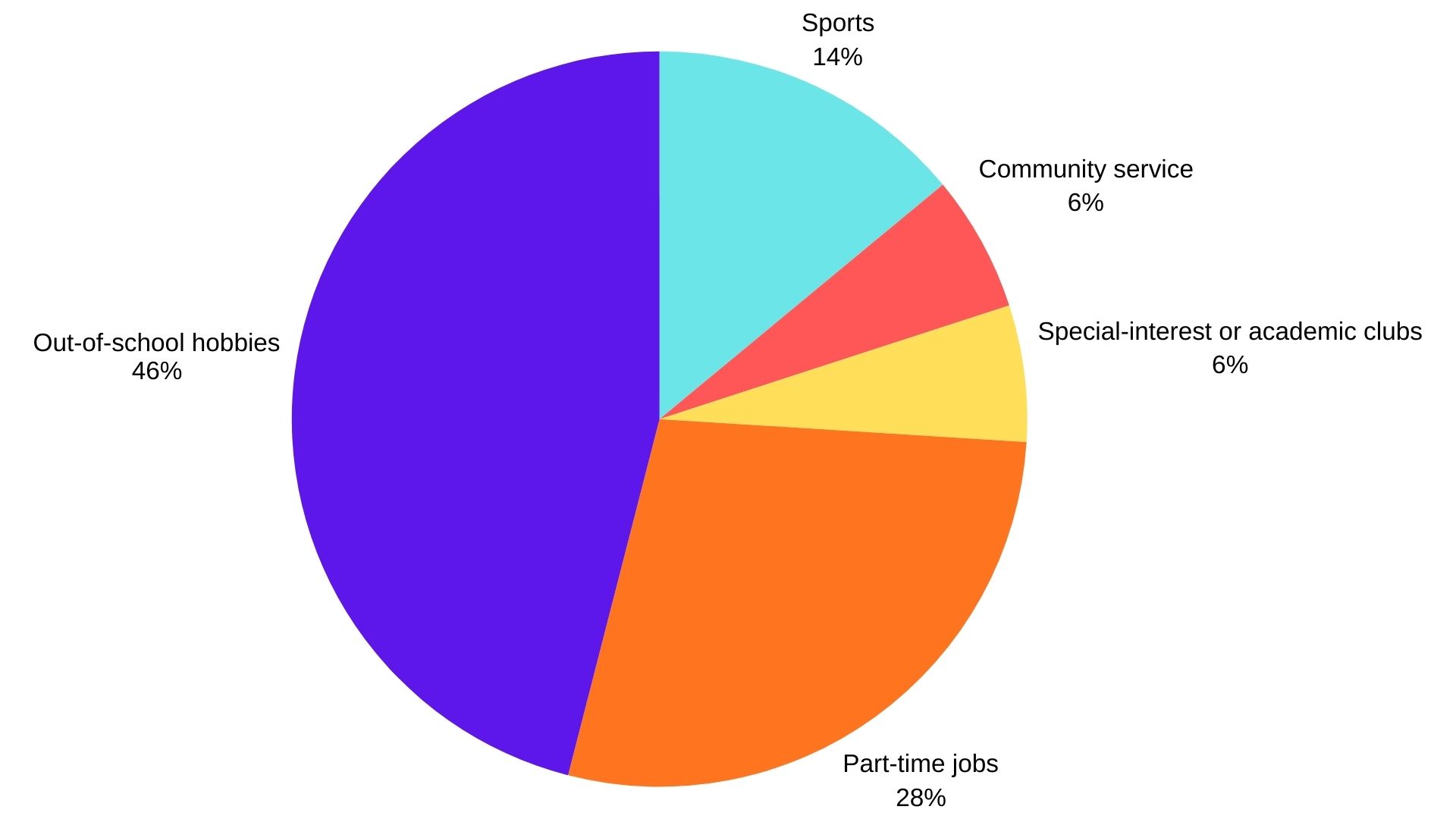
50 McIntosh students surveyed via Google Forms
“I would say National Science Bowl [is my least valuable extracurricular] since I’m only a member because I’ve only been in it for one year. Even though we made it to state, we didn’t really place well. It was still a good experience overall, but I would say it’s just not that impactful” Deng said.
As shown from the sampling of what students think which extracurricular is MOST valuable to a college admissions officer, most students believe that having a leadership role is the most important. Even so, Ayaan Popatiya who is the President of Future Business Leaders of America and Student Government Parliamentarian, does not hold a primary role to be necessary.
“I don’t think leadership roles are what defines your extracurricular. It’ll come naturally at the end in your junior and senior year. So don’t chase the leadership role, but chase impact,” Popatiya said.
Popatiya and Love agree that a leadership role is not a needed label in a college application.
“It’s not necessary to be an officer, if you want to then yes, but that’s not necessarily what they’re looking for. Just something that you’re super involved in and care about,” Love said.
The role of college admission officers is to choose qualified students that will contribute positively to the specified college.
“If you contribute a lot of time to a service or to a community, then putting that on your application is imperative because colleges want to know that you are super dedicated and driven to do good at their college,” Bednarowski said.
When an applicant can be accredited to serving their community in high school, then an admission officer is likely to believe that you will continue to do the same at their college.
“It’s the impact you have in your community is what makes your extracurricular activities stand out, and it’s also the hours you put and how many years you’ve done the activity for. So it looks really good if you started freshman or sophomore year and stayed true to the activity,” Popatiya said.
To the underclassmen who are looking for clubs that suit their needs, Love has a solution.
“A lot of the time ninth or tenth graders say ‘I really want a strong college application. What do I need to do?’ So, I usually show them the club information on the school website,” Love said.
Love suggests that students should demonstrate their ability to balance various commitments.
“I always tell students to try to be in something that has a community component like environmental club, key club and interact club. I also tell them to get involved in some kind of community service outside of school or if they’re involved in other things outside of school, like church or something, and if they can have a job. Not everybody can balance all of that, which is fine, but colleges like to see people who can balance it all too,” Love said.
With all that high schoolers are expected to take on, how is schoolwork prioritized?



Andrew Eisele, an alumni from McIntosh who is currently enrolled in UGA as a first year, had four years to perfect this blend of homework and activities as previous president of McIntosh’s Environmental Club, co-president of Drug-Free Fayette Youth Action Team and vice president of Interact club.
“I was pretty proactive in trying to get my work done. I knew that if I had the ability to watch a TV show while doing my math homework, I wouldn’t do it well and I wouldn’t be focused. So I tried to stay focused on what I was doing and try to get stuff done quickly so then I could leave time for those other activities,” Eisele said.
Students tend to overload themselves with activities because they may feel like they need to do it all.
“One of the general rules to go by with activities is to go deep, not wide. So when you try to go wide, you think, ‘I have to load myself up with all these clubs. I have to be a volunteer. I have to get a job.’ But unfortunately, that doesn’t look very impressive. That looks very busy, and it shows that you’re willing to do a lot of things, but do nothing really good. So that depth is really important. What can you say for your time in these clubs? So you have to make them valuable. I would encourage students before they choose any clubs to be a part of. Think first about how it is you want to contribute to that club, and what value that’s going to have, not only on the club itself or the purpose of the club, but also on you,” Cruver said.


Bri • Dec 15, 2025 at 2:36 pm
I never knew this thank you!